The Benefits of Taking a Painting or Printmaking Class on Your Brain
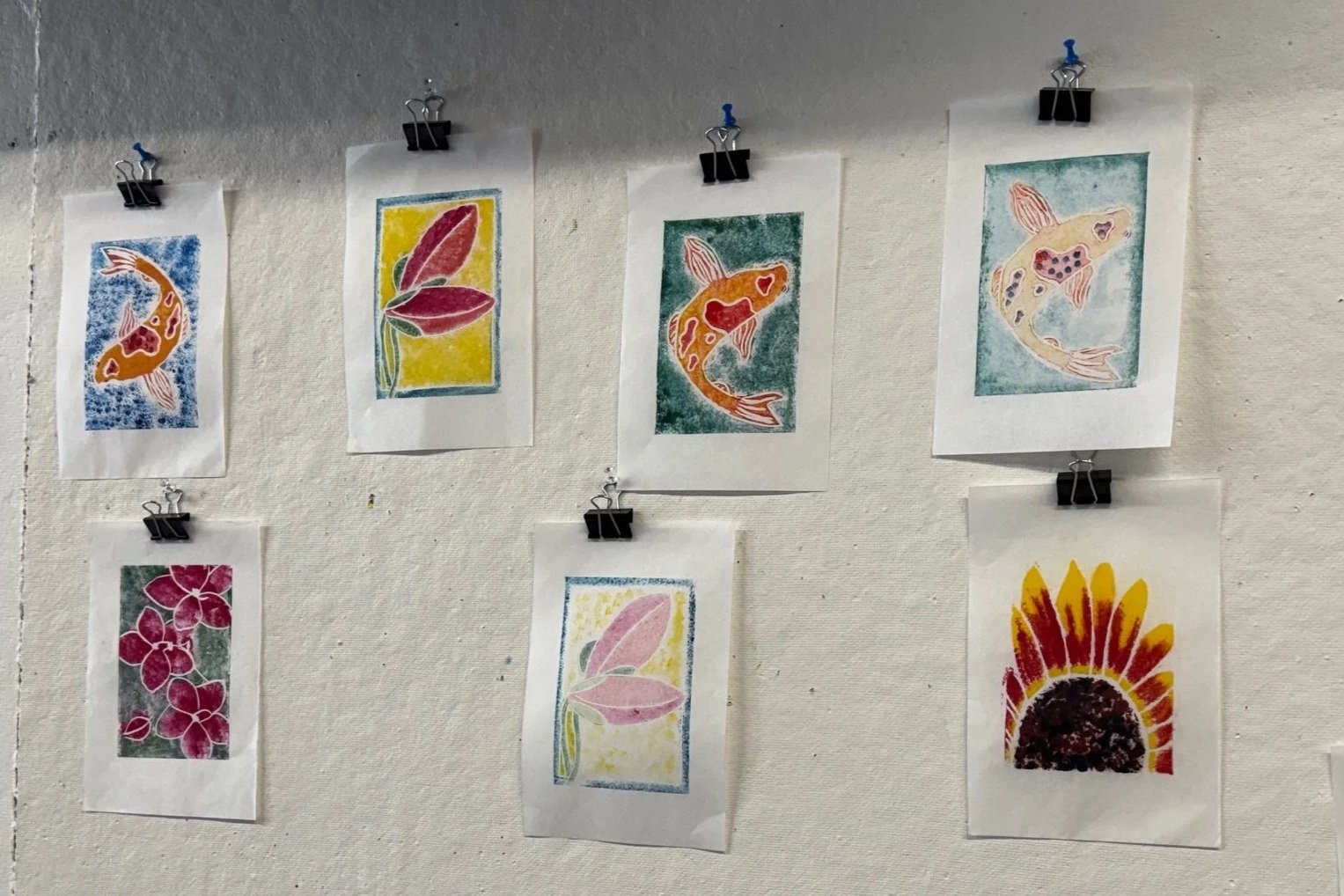
Fine art classes like painting and printmaking aren’t just “cute hobbies for retirees.” They’re basically a gym membership for your brain. I know this may sound like a lot of hype or a bit of B.S., but there was a strong link found between creative engagement and good brain health in several recent studies.
As example, a study by Nature Communications published in late 2025, linked creative work, including the fine arts, with slowing down the clock on brain aging. It found that participants with more creative engagement had biologically younger brains than their peers who did not engage in activities such as fine art, music, dance, and even gaming, in the study.
Here’s how it works. Your brain is always changing. Creativity helps it change in the right direction. Think of it this way—creative involvement has a similar impact on the brain as exercise has on the human body.
It’s good for the senior brain in so many ways, including:
Cognitive Stimulation
When you take an art class, your brain has to:
Learn new techniques
Plan composition
Mix colors
Problem-solve (“Why does every mix of color I make look like mucky brown?!”)
Adjust when things go sideways (Just try a Tessellation Printmaking class and you’ll see what I mean!)
That kind of mental juggling strengthens neural pathways and supports cognitive flexibility — which is a fancy way of saying your brain stays nimble instead of rigid.
Focus and Mindfulness
Watercolor painting especially forces you to slow down. You can’t boss the paint around — it does what it wants. With some patience and many layers of paint, you may be rewarded. As a beginner, I’m starting to feel the reward occasionally, but it’s a process!
That kind of deep focus:
Lowers stress hormones
Improves mood
Reduces rumination such as repetitive thinking or negative thoughts that can contribute to depression and anxiety
Feels almost meditative
And printmaking? That layered, methodical process is fantastic for attention and sequencing skills.
Motor Skills and Coordination
Fine art uses:
Hand-eye coordination
Fine motor control
Bilateral movement (ex. using both hands) that stimulates and engages both hemispheres of the brain to open new neurological pathways, and help bridge "thinking" and "feeling"
Spatial awareness to create depth (perspective), arrange elements (composition), and manage positive and negative space
All of that keeps the brain-body connection sharp. It’s subtle, but powerful.
Emotional Health (The Underrated Superpower)
Art gives you:
Expression without having to “explain yourself”
A sense of progress and mastery
A break from identity being tied to work or caregiving
For many older adults, creating something tangible restores a sense of personal control and ownership of their own actions. That matters more than we talk about, particularly as we age.
Social Connection (Huge Factor)
Fine art classes mean:
Shared vulnerability
Laughter over “happy accidents”
Low-pressure conversation
Social engagement is one of the strongest protective factors against cognitive decline. The art is almost the excuse — the connection is the magic.
Bonus: Neuroplasticity Doesn’t Retire
Your brain can form new connections at any age. The idea that seniors can’t “learn like they used to” is outdated. The brain just needs novelty and challenge and repetition. Art gives you all three.
Watercolor painting and printmaking are wonderful choices. They’re challenging enough to grow the brain, gentle enough not to feel overwhelming, and messy enough to be fun.
And honestly? There is something deeply satisfying about pulling a print off a plate and thinking, “I made that.”