What Great Destinations Can We Visit Without The Crowds And Climate Risks?
Travel has become significantly more complicated than it was in years past. You have to overthink your entire itinerary due to availability constraints. Many decisions, even some dinner reservations, must be made up front with your airfare, lodging, and car reservations. You find yourself deciding what you will eat in 3 months at a particular stop on your itinerary because of the influx of tourists and limited restaurant options. Supply just can’t meet demand at these locations during peak travel dates. And overtourism is spreading.
Additionally, in some regions of the world, weather patterns and their changes have been as impactful on travel as overtourism. Years ago, Europe was an obvious summer destination. Who can forget hearing about all the college post-grads backpacking through Europe with the bare minimum and a Eurail Pass? Today, summers in many southwestern European countries are hot, hot, hot. Keep in mind, air conditioning is not universal across Europe—not even in top-visited cities— even when temps reach 100 degrees for multiple days in a row. (I can smell the sweat of the packed streets of Rome as I type this article.) And recently, we’ve seen images of wildfires in Greece, Spain, Italy, and elsewhere that have driven locals and tourists to safety with little notice. For sure, this is not the vacation experience any of us dreams of.
Overtourism and climate change are definitely negatively impacting travel.
Overtourism
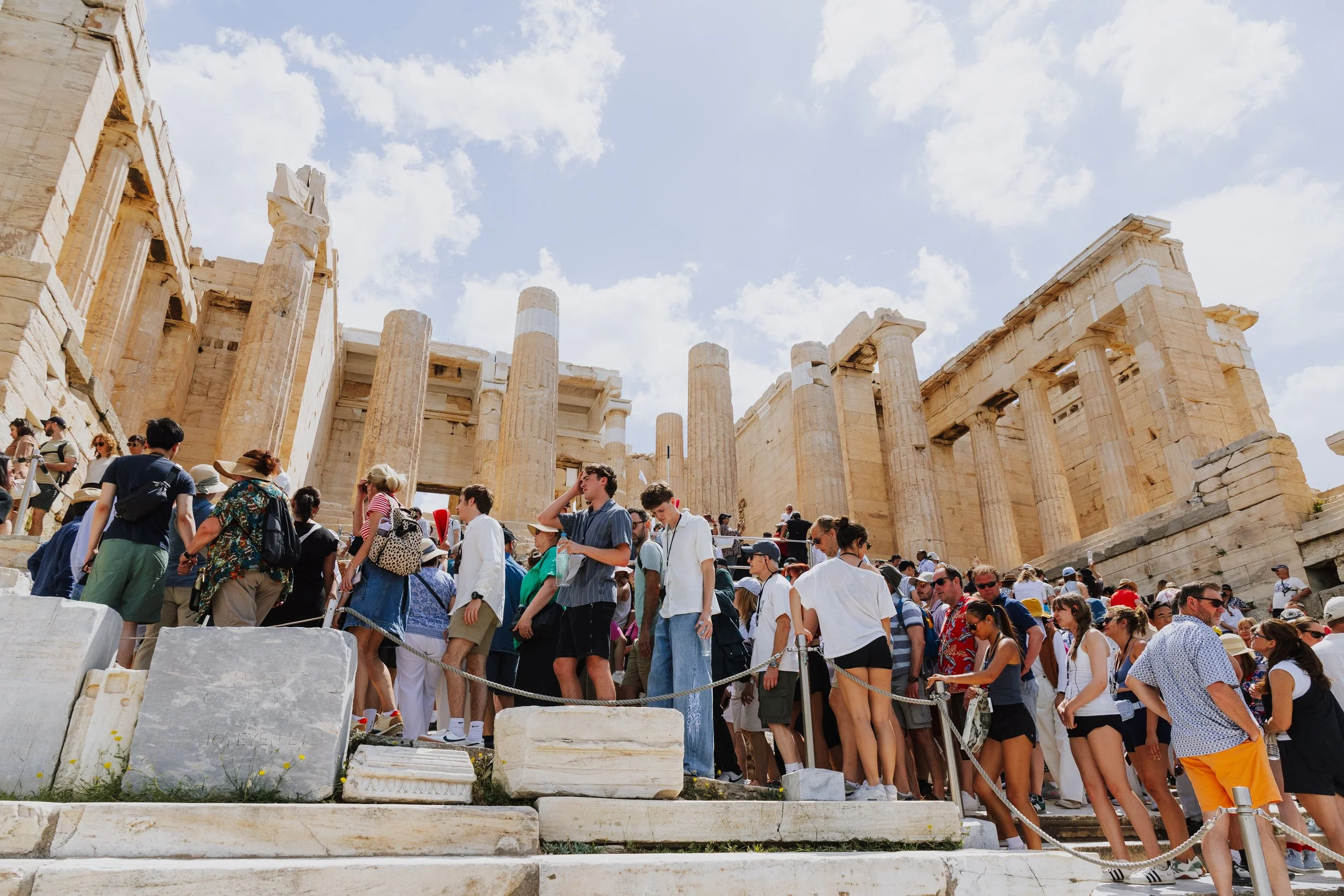
A crowded scene of tourists exploring the ancient ruins at the Acropolis in Athens, Greece. (Photo: K, Pexels)
More people than ever are now traveling, and that means there’s more competition for lodging, flights, and catching a glimpse of those oh-so-important (yes, I’m being sarcastic) Instagram-famous locations. The rapid post-pandemic increase in travel continues to strain the travel industry's infrastructure.
And it’s tough on local communities. In places like Barcelona, Paris, Florence, and the Canary Islands, there have been growing protests by residents targeting issues such as skyrocketing rents, overcrowded services, and the loss of local character. Today, you might head to a popular destination like Paris or Croatia during the summer, visualizing quaint cobblestone streets or ample space on a sandy beach. The reality during peak season is that you’ll likely experience large crowds, long waiting lines, more souvenir shops than local culture, and barely enough personal beach space to land your butt and sink your toes in the sand. During some weeks, it’s unlikely you will experience any of the idyllic places the way they are shown in brochures or on social media.
Yet, travelers are still drawn to the same countries, cities, and experiences that have long been popular. In Europe, think Florence, Venice, Dubrovnik, Santorini, Paris, Amsterdam, and Barcelona. But unlike in past decades, today you get to experience them with throngs of people and selfie sticks, all fighting for air in small spaces. It can be a miserable experience.
Not to diminish the value and amazing things to see in these cities, but do you really want to be jostling for space in the packed square as you try to keep your tour guide’s flag or your travel companion within view?
Climate Change

Firefighters manage a wildfire in Torino, Piedmont, Italy, during the summer of 2026. (Photo: Marco Allasio)
Extreme weather due to climate change can translate to very high temperatures or rainstorms that cause flooding. According to The Guardian, the climate crisis is hitting Europe particularly hard—Europe is heating up twice as fast as any other continent. Why? Europe is vulnerable for four reasons: changing weather patterns, its proximity to the Arctic, less snow, and, get this, lower air pollution. Why does lower air pollution make Europe more vulnerable to heat? It has to do with the aerosol masking effect.
We’ve all seen the maps (mostly red and orange), and the images of wildfires and drought across the region. And that’s just one continent’s reality.
So Where Do You Head Next?
At times, it can seem as if vacation travel, once used for relaxation, has become a battle of wits and an overuse of energy. In some cases, you need at least a week, post-vacation, to recover.
However, if you plan your travel to a specific place outside peak times and broaden your options beyond the most popular destinations, travel can still be enjoyable, relaxing, and memorable in a very positive way. In fact, you may find it is a much better travel strategy than, for example, visiting Paris in August.
Overtourism and climate change are reshaping travel choices. And the biggest questions you need to answer include:
Where can you spend your vacations and truly feel refreshed, excited, or adventurous (your choice)?
What are some options that offer vibes similar to the most popular destinations but still give you an amazing experience and some much-needed R&R?
Here are some travel options:
If You Want Nature
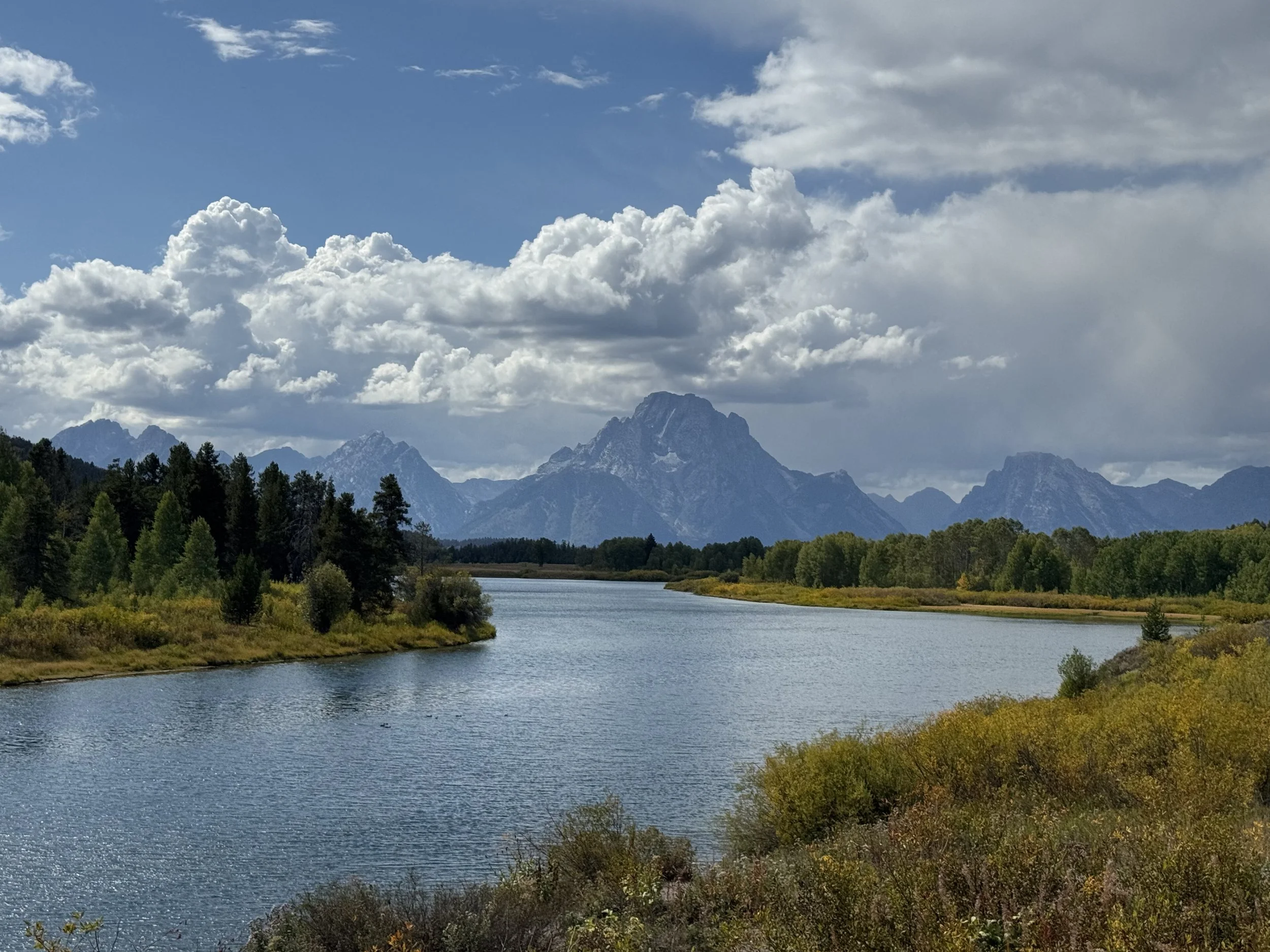
Grand Teton NP in Wyoming offers quiet and solitude. It’s more than just a pass-through to nearby Yellowstone NP. (Photo: Edie Kramer)
I’m a big fan of our National Parks, but the most well-known of them are busy, busy, busy during peak season. Unless you’re prepared for this, a visit to one of the Top 10 NPs can require sharing nature’s quiet beauty with thousands of strangers.
The Top 10 most popular (in order by highest visitor numbers) are: Great Smoky Mountains, Zion, Yellowstone, Grand Canyon, Yosemite, Rocky Mountain, Acadia, Grand Teton, Olympic, and Glacier. During peak season, you’ll need reservations (often a full year in advance), and there will be crowds and traffic jams at key spots in each park. A bison or bear sighting can cause 50 cars to stop or block roads at Yellowstone during the summer months. Acadia’s one-lane Park Loop Road is beautiful as it meanders along the rocky coast and pine forest, but you’ll share it with hundreds of cars searching for a handful of parking spaces along the route. My strong recommendation is to visit the most-visited NPs during their shoulder seasons. And keep in mind ‘shoulder’ season is not always spring and fall.
Another option, in addition to visiting during shoulder- or off-season, is to head to less-visited National Parks. They won’t be any less amazing, and you’ll have a better chance of enjoying nature as it was meant to be.
For starters, #11-20 on the National Parks list (again, based on visitor numbers) are Cuyahoga Valley (OH), Joshua Tree (CA), Indiana Dunes (IN), Hot Springs (AR), Gateway Arch (MO), Bryce Canyon (UT), New River Gorge (WV), Hawaii Volcanoes (HI), Shenandoah (VA), and Mount Rainier (WA). Check one of those out instead of one of the Top 10. Or better yet, check out the next 10 on the list.
Heading to an NP with fewer visitors often means the location is a bit farther from a metropolitan area or airport and takes a bit more time or effort to reach. Yosemite during a trip in April was packed; Sequoia was blissfully pleasant (we had many spots to ourselves) just a few days later. Location. Location. Location.
If Your Dream Vacation Is Italy
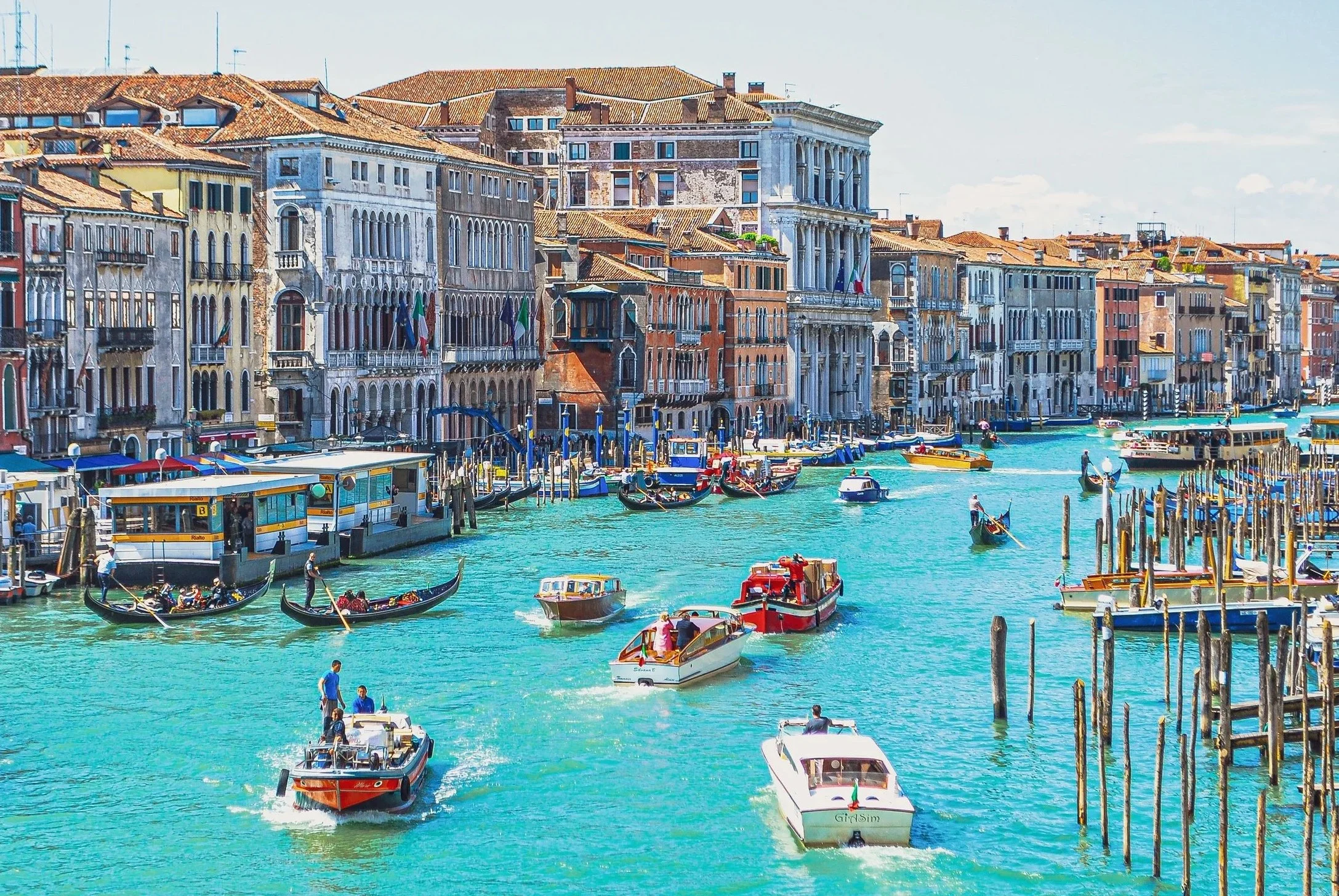
Venice, Italy. (Photo: Cristian Salinas Cisternas, Pexels)
You don’t need to ditch this dream vacation. That said, if you spend a little bit of time learning more about Italy’s regions and the different options available, you might realize the popular cities (Rome, Venice, Florence) may not give you that authentic Italian escape you’re envisioning. Italy is not the same as it was 20 years ago.
I’ve visited a large swath of Italy over multiple trips. It’s a beautiful country with unbelievable food, wine, art, history, and more. However, today it is difficult to get an authentic Italian experience if you are only visiting Rome, Venice, Florence, and Tuscany, as many travelers do. Commercialization in these places is rampant. Many restaurants and shops are no longer run or staffed by locals.
If it’s cities you love, pass on Rome, Venice, and Florence, particularly if you’ve visited before. Compared to an earlier trip, my recent visit was a disappointment because of overtourism—way too many people and tours everywhere. Plus, there were so many cheap souvenir shops all selling the same items stamped ‘Made in China’. My choices: Verona and Padua instead of Venice; Bologna or Lecce (in Puglia) instead of Florence; and Naples instead of Rome.
Instead of Tuscany and Umbria's hill towns, which have become overrun and touristy, check out Puglia (which is starting to get busy) and Abruzzo (which is still under the radar). Both of these regions along the Adriatic still offer quaint villages, great food, beautiful coastlines, and fewer crowds. And they’re cheaper to visit than the more popular, known-to-all regions.
Another, more radical, option? Go to Portugal instead of Italy. Here’s why.
When Croatia Is A Must
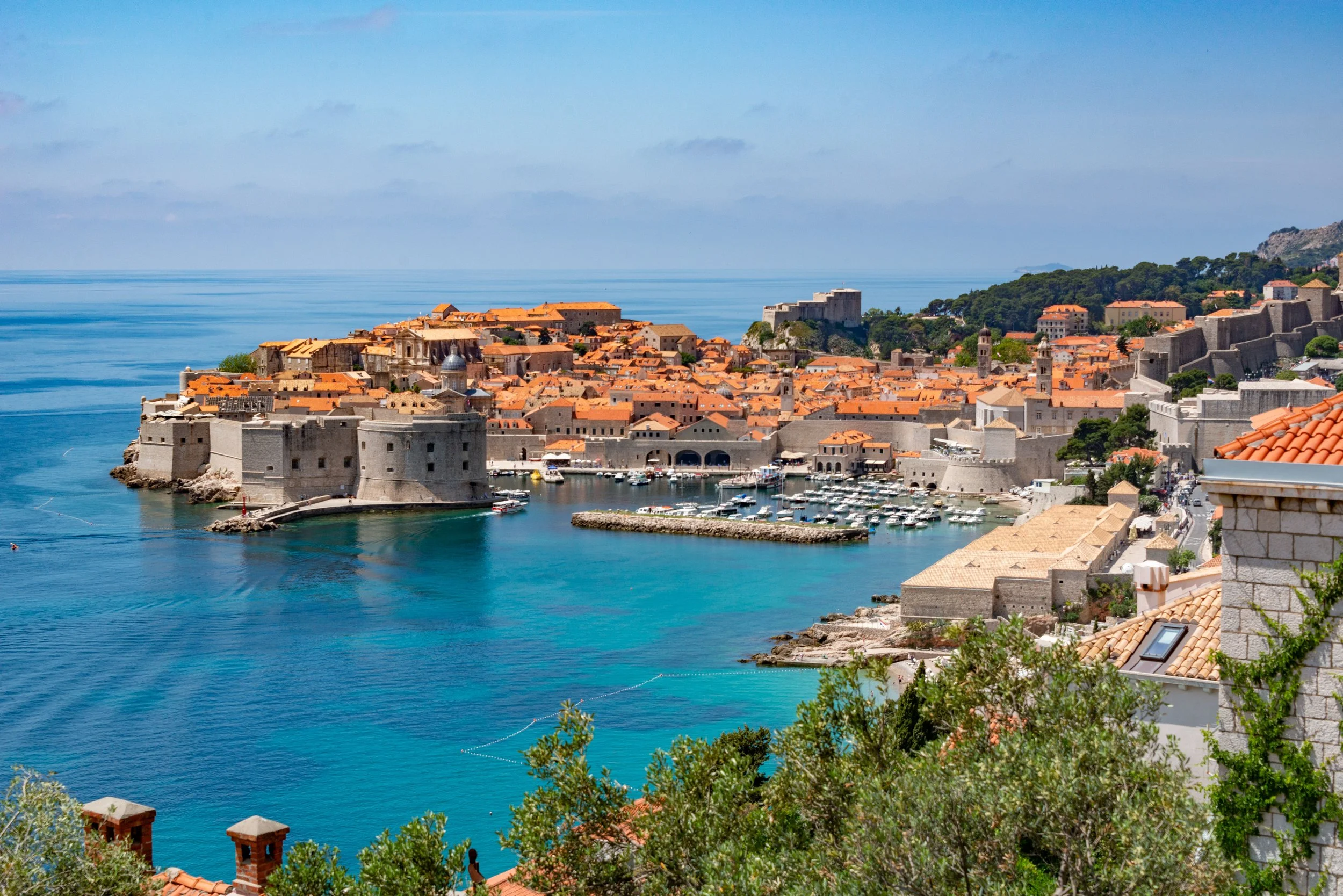
Old town and city walls of Dubrovnik, Croatia. (Photo: Diego F. Parra, Pixels)
Unfortunately, Game of Thrones (GoT) put Croatia ‘on the map’. Few had visited the country prior to its GoT filming fame, and then it became every fan’s ‘must-see’ travel destination. Overtourism came quickly.
On its own, Croatia has a ton of unique natural beauty. The country’s National Parks, coastal towns, and just under 50 inhabited islands (with hundreds more uninhabited) are some of the diverse stops you can make on a trip there.
I so want to visit Croatia, but overtourism has made me hesitate and choose other destinations to visit first, year after year. Here’s my thinking on when and where I would go to enjoy the country without becoming part of what I’ve heard are unbearable crowds in the equally unbearable heat during the summer months.
My inclination is to go in May (off-season) when the weather is in the 70s (Fahrenheit). Instead of jumping from one popular city to the next (Dubrovnik, Zadar, and Split), I’d visit only Dubrovnik, where I would hire a tour guide for a Game of Thrones (GoT) tour—I love to see where movies and TV series are filmed, and Dubrovnik has many spots. Otherwise, I would spend the bulk of my time in less-visited cities like Trogir and Šibenik and take a few day trips to some of the country’s islands easily reached via the ferry system.
The one exception I’ll make regarding crowds is visiting Plitvice National Park. It’s too much raw natural beauty to miss even though I’m sure walkways and hikes will be very congested.
You Want Europe Without The Heat Or Crowds
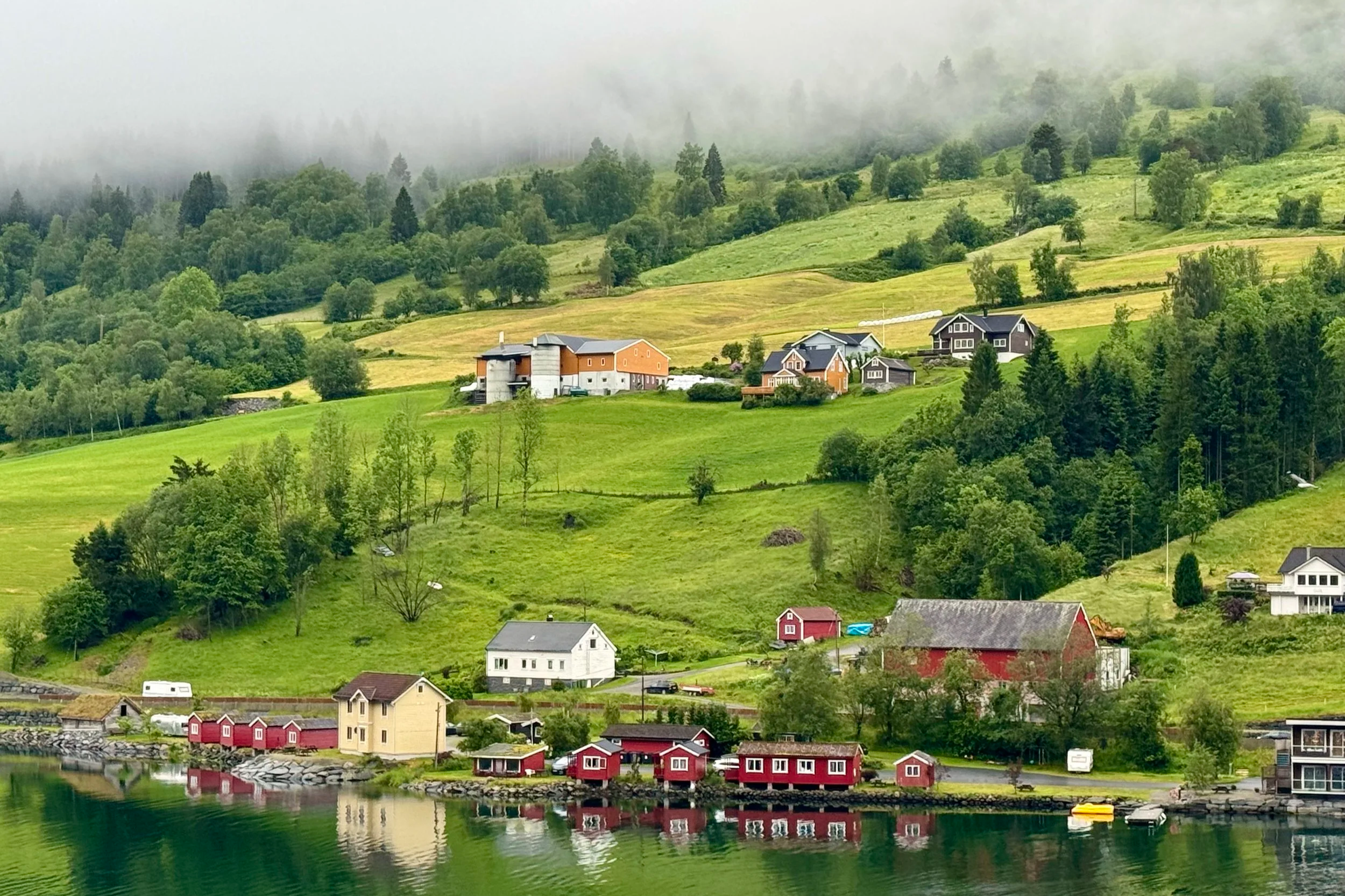
Olden is a small village in Vestland county, Norway, famous for its proximity to majestic glaciers and dramatic fjords. (Photo: Edie Kramer)
One of my favorite discoveries recently was Norway. I was on a cruise, but without a doubt, this is a place you could spend a few weeks visiting by car—and that’s my plan.
The country has so much to offer: quaint villages amongst the fjords, friendly cities, natural beauty at every turn, and a relaxed vibe from welcoming locals. The air is clean, clean, clean. It’s a bit ‘old world’ with yarn and sewing shops, and restaurants only selling local produce and the day’s catch. I didn’t see any young children on iPhones (perhaps I was just lucky), but rather saw them enjoying simple fun with families in squares and parks. Potted flowers in every common space. And one of the best parts: no heat or humidity, and no crowds.